Why DOGE?
You’ve all heard Gov. Ron DeSantis tick off Florida’s accomplishments: paying down the state debt; maintaining the lowest ratio of state government workers to population; consecutive year- over-year reductions in budgeted spending. That track record has made many wonder why Gov. DeSantis so readily embraced the idea of creating a state version of the federal Department of Government Efficiency (DOGE) here in Florida.
The answer is that one of the things that makes America great – our federal system of multiple spheres of sovereignty – can also be a weakness, as when irresponsible or abusive behavior at the federal level spills over to the states. During the four years of the Biden administration, Florida cemented its position as the leading exemplar of freedom, effective governance, and responsible democracy. But that doesn’t mean Florida was immune from the effects of disastrous national governance.
Federal DOGE arose as a direct reaction to the policies of those four years, during which Americans witnessed trillions of dollars in inflationary federal spending inspired by the fanciful “Modern Monetary Theory” embraced by the left. That fiscal irresponsibility was reinforced by easy monetary policies that further weakened the value of a dollar. After serial entrepreneur Elon Musk created a plan to create DOGE to target wasteful spending across government, President Trump promoted DOGE during the 2024 presidential campaign and established a “United States DOGE Service” out of the former U.S. Digital Service upon taking office.

There is more than just wasteful spending to be unwound. Americans were subjected to four years of convoluted new rules and regulations on households, businesses, and state and local governments, released from Biden bureaucrats as if they were throwing a ticker tape parade. We saw the open embrace by the nation’s elites of divisive, discriminatory, and anti-American policies under the acronyms “DEI” and “ESG” and a related “open borders” policy rooted in a refusal to prioritize the interests of Americans over those of foreign nationals. Amidst these badly misguided policies, we experienced a failure to deliver on achieving everything from the basics of national security (e.g., the haphazard withdrawal of American support from Afghanistan) to highly-touted political priorities (like broadband infrastructure projects that yielded zero connected households and EV charger grants that led to a mere handful of operating chargers).

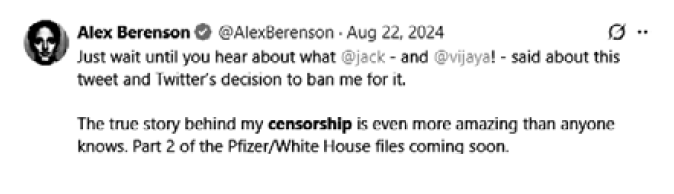
Layered atop all this were unprecedented efforts, both covert and overt, to deprive Americans of their natural liberties and constitutional entitlements. The federal government suppressed the freedom of speech through the creation of an Orwellian “Disinformation Governance Board,” cooperation with the censorship units of foreign governments such as the United Kingdom’s Counter Disinformation Unit, and even direct White House pressure on social media companies to “deplatform” everyone from critics to comedians to Gov. DeSantis himself.
All of these animated the need for federal DOGE, and they undergird Florida DOGE as well. Because while Gov. DeSantis and other patriotic Floridians worked hard to mitigate the effects of bad national government, some consequences could not be avoided. It is the need to unwind the effects of four years of federal government that, alongside basic good government principles and the desire to build on Florida’s recent achievements, define the Florida DOGE effort.
What is Florida DOGE Looking at and Why?
The source of direction for Florida DOGE is primarily Executive Order 25-44, under which Gov. DeSantis established our effort, along with Ch. 2025-199 of the Laws of Florida, enacted at the end of the last legislative session, which granted additional authority and provided further direction to Florida’s DOGE effort. These authorities direct Florida DOGE to concentrate on spending within county and municipal governments, unnecessary spending and inefficiencies within Florida’s universities and colleges, and to continue ongoing efforts to streamline Florida’s state agencies.
The need to address municipal governments exists because they were particularly vulnerable to the federal maladministration described above. Many of the Biden administration’s massive spending programs directed funds straight into the coffers of local governments, bypassing traditional state-level review and oversight. The combination of inflationary policies with the arrival to Florida of Americans “fleeing to freedom” drove steep increases in property values in much of the state. With property taxes forming a core pillar of local budgets, this increase in revenues gave local governments still more money to spend.

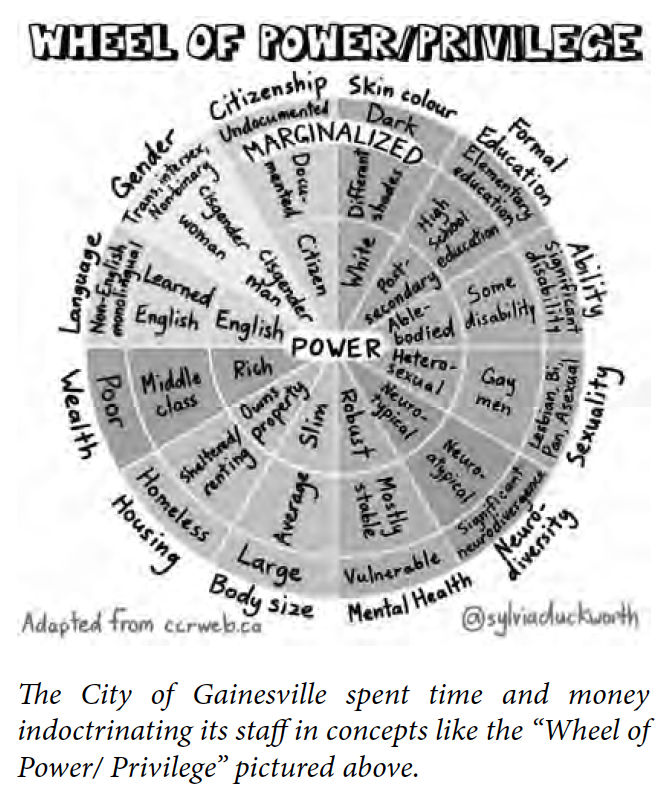
Pressured by federal policies and a media monoculture – and unaware of the deliberate suppression of competing voices – local government officials also embraced the DEI and ESG ideologies, leading to the waste and ineffective use of taxpayer dollars. The federal government imposes immense taxes on Floridians, and left-wing ideologues in Washington systematically conditioned the repatriation of those tax dollars to our state on everything from the purchase of electric vehicles to the establishment of race-based training programs to berate city employees
for their so-called “privilege.” In many cases, such programs were explicitly encouraged to be “permanently transformational,” i.e., embedded in such a way that future elected officials would be unable to undo them.
DOGE’s focus on higher education is similarly tied to what came before. Over the last four years, federal grants funding much of our academic research came with “strings attached,” undercutting the State of Florida’s efforts to eliminate “Discrimination, Exclusion, and Indoctrination” from the curriculum. This reinforced the existing, deeply established commitment in the academic world to left-wing principles that devalue merit, excellence, and even basic courtesy. While Florida has kept tuition steady throughout the last decade, making public higher education a better value in Florida than anywhere else, this has come at the price of rising state subsidies, as illustrated for the State University System below.
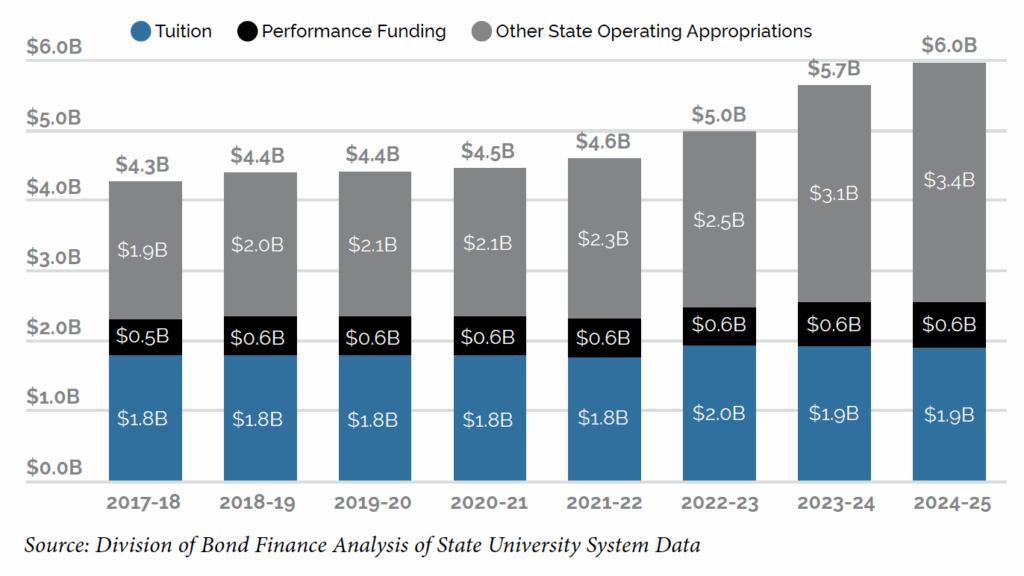
This makes it imperative to understand whether Florida’s universities are succeeding in reestablishing the primacy of scientific inquiry, merit, and color-blindness, and whether they are delivering results efficiently.
How is Florida DOGE Carrying Out its Work?
The legal authorities mentioned above also provided a “how-to” for Florida DOGE. Executive Order 25-44 directed Florida DOGE to maximize its usage of advanced technology, such as data analytics and artificial intelligence, to achieve results using existing staff and funding as well as publicly available data when possible. The end-of-session statutory authority
encouraged the use of on-site visits and direct access to local government data systems, while establishing penalties for non-cooperation by local governments.
While these provide significant authority to Florida DOGE, Florida’s local governments are not mere dependencies of the state, and key decisions must be made by their own democratically elected officials. For that reason, Florida DOGE is focused on bringing transparency to wasteful spending and on making recommendations to state elected officials. In this way, Florida DOGE is in a fundamentally different position from the federal DOGE, where the Constitution places executive power in the hands of the President, who may delegate directly to the federal DOGE the authority to cancel contracts, rescind grants, terminate programs, and reduce headcount.
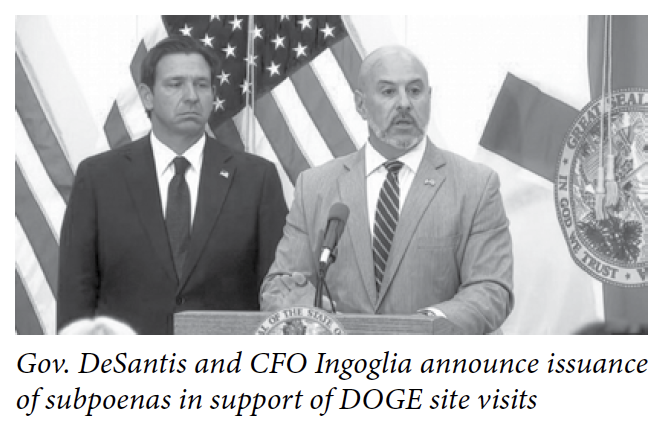
Two more elements of DOGE’s structure bear note. First, since the appointment of new Chief Financial Officer Blaise Ingoglia in July of 2025, the CFO has served as an important partner for Florida DOGE. CFO Ingoglia has long had a passion for pursuing wasteful spending, with longstanding renown for his “Government Gone Wild” town halls (and @GovGoneWild handle on X). Of equal import is that the CFO has statutory authorities to provide oversight to all state dollars, whomever the recipients may be – and to investigate noncompliance with those oversight efforts. That authority has already been exercised, when Florida county officials behaved oddly during interviews with Florida DOGE team members and information emerged suggesting they were seeking to conceal their use of race and ethnicity in the administration of public programs.
As with Federal DOGE, Florida DOGE has a sunset date. This is important – it heeds Ronald Reagan’s 1964 warning that new government “programs, once launched, never disappear . . . [and become] the nearest thing to eternal life we’ll ever see on this earth.” The partnership between Florida DOGE and the CFO takes advantage of the fact that the CFO’s office is already empowered to continue the effort of identifying and calling out wasteful spending after the “era of DOGE” comes to a close.
Florida DOGE’s Activities So Far
Local Governments
At the municipal level, Florida DOGE began by reviewing publicly available information about the growth in ad valorem tax revenues and budgets across the state in recent years. These efforts helped the DOGE team identify an initial set of cities and counties for further review.
This review came in the form of on-site visits by teams of auditors and analysts drawn from across state government, making use of the new statutory authority to access local government premises. During August of 2025, these teams visited a dozen cities and counties, reviewing data and interviewing staff. During their visits, they identified numerous examples of excessive spending, ill-advised judgment, and inappropriate DEI in these communities – examples that are often astonishing. Orlando is literally spending taxpayer dollars to oppose state immigration enforcement efforts, funneling money to a non-profit that helps illegal immigrants evade deportation. St. Petersburg pays for “affirmative action” software used to develop race- and gender-based hiring quotas for the vast majority of city jobs. Jacksonville funded a one-mile stretch of sidewalk at a cost of $7.5 million – more than 8x what the Florida Department of Transportation estimates is typical for such a project. Pensacola hired a professional management company for the historic Saenger Theatre. These supposed “professionals” chose to schedule a “drag show” at the same time that the city is scheduled to bring children downtown, just a block away, to line up for pictures with Santa Claus.
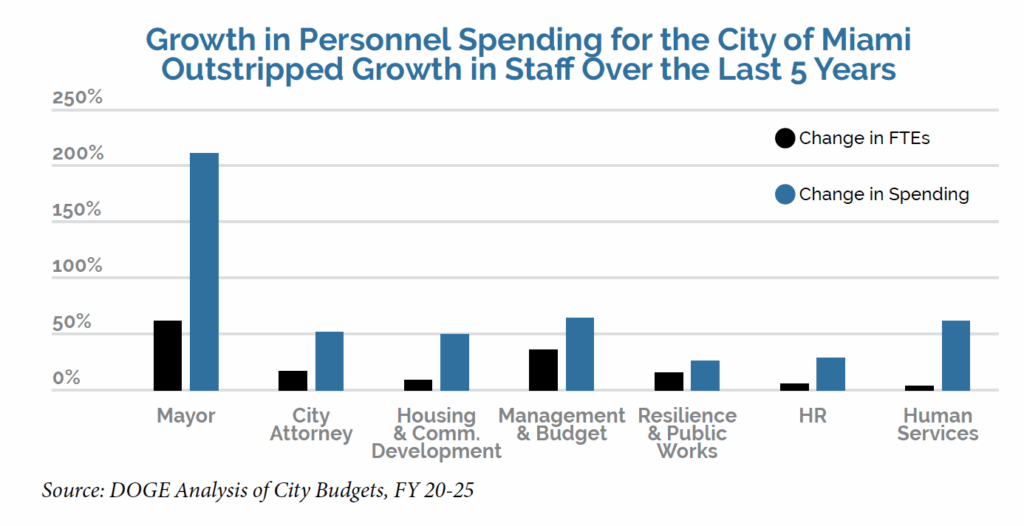
These examples just scratch the surface of the irresponsible local spending that the Florida DOGE team has identified. The bulk of local government funds are spent on personnel costs, and cities and counties across the state have been raising salaries at a profligate rate, and occasionally, rapidly expanding workforce size. Municipalities are employing highly paid executives in questionable roles such as “Action Center Director” (St. Petersburg), and “Assistant County Administrator for Equity and Community Impact,” (Hillsborough County). The pay for local officials routinely outstrips that of federal and state counterparts, not to mention the median pay levels of local residents. And city and county budgets are being inflated by major pay increases made across the board, regardless of merit, unreasonable amounts of overtime amounting to 40%, 70%, or even 100% of base pay, and excessive leave payouts on separation. These compensation decisions have long-term consequences: by raising the baseline from which retirement benefits are calculated, they can increase the burden on taxpayers for decades to come. For example, the City of Miami has reported to the state that it already spends nearly 1 in 6 city dollars on pension benefits.
The DOGE team’s work on city and county spending has been compiled into an interim report, which makes a wide array of initial findings ranging from city spending patterns to individual examples of wasteful spending available to the Governor and the CFO for their use in policy development.
Higher Education
Florida DOGE’s initial undertaking regarding the state’s colleges and universities involved reviewing federal grants made to universities to identify discriminatory grants that reflected racial preference, gender ideology, or other similar ideological underpinnings. Florida DOGE
worked initially with Federal DOGE to review grants for cancellation by the federal government and then worked with individual universities and the State University System to repurpose other grants to remove objectionable components. At a minimum, these efforts resulted in the repurposing or cancellation of $18.4 million in federal grants (probably more, but attribution of federal actions to cancel and revise grants is sometimes difficult). Florida DOGE is also looking at millions of dollars in other grants of concern to state universities, as well as more than
$20 million in troubling grants to institutions in the Florida College System. Florida DOGE is continuing to review other aspects of college and university operations and governance and expects that there will be additional recommendations to help Florida build on the leading status of its universities.
Resetting Expectations About Government
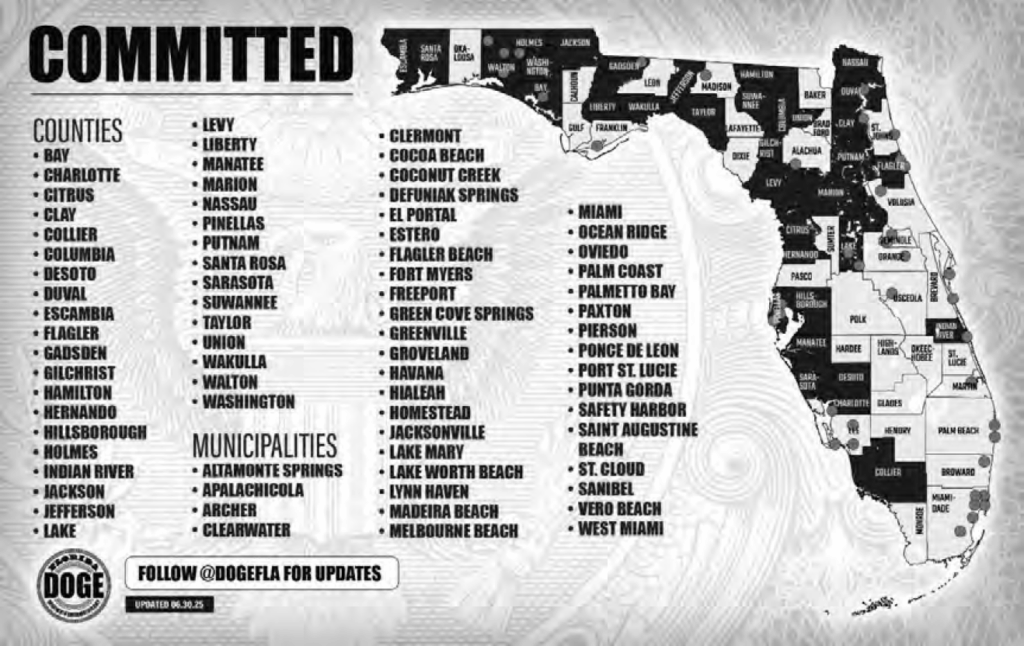
With ongoing state agency DOGE efforts helping to deliver Florida’s second consecutive state budget reduction, the State of Florida helped demonstrate to Floridians that they can expect more fiscal responsibility at all levels. Floridians have responded with remarkable enthusiasm, with more than half of Florida’s counties and over three dozen municipalities issuing statements of support for DOGE, passing supporting resolutions, or requesting assistance from the Florida DOGE team. In several places, commissioners and interested citizens established local DOGE committees. The Lee County Clerk even modified “DOGE” into “COGE” — appointing a Chief of Government Efficiency. Florida DOGE also received an outpouring of supportive communications, recommendations, and tips on excessive spending from citizens, local officials, and even tourists visiting the state.
Recognizing that efforts by knowledgeable local officials to control spending at their level hold the greatest promise for long-term benefits for Florida taxpayers, Florida DOGE has worked hard to support local government efforts. With the assistance of the Florida Association of Counties and the Florida League of Cities, Florida DOGE provided a guide in “How to DOGE Yourself” to assist localities in good government and is working on developing aids for local governments to use in adopting zero-based budgeting in the future. Taking a page from the federal DOGE’s efforts to identify excessive spending through the use of artificial intelligence, Florida DOGE has also been working to identify opportunities to pilot AI-based reviews of municipal spending as well. These are not well-trod paths, but the Florida DOGE team is optimistic about their promise.
As the process of establishing fiscal year 2025-26 budgets unfolded across the state, in many communities, these commitments translated into action benefiting taxpayers. Counties such as Pinellas, Lee, Polk, and Brevard lowered their countywide millage rates. In Miami-Dade County, an engaged County Commission pressed the county mayor and her staff on numerous budgetary line items, extending debate in two consecutive budget meetings nearly until dawn. Although a resolution to lower county millage rates failed, these all-night efforts spearheaded by taxpayer-minded Commissioner Roberto Gonzalez yielded real savings in the Miami-Dade budget. In Hillsborough County, commissioners led by Joshua Wostal began the process of reforming a grant-making system bloated by nonprofits drinking deeply from the taxpayers’ trough. Tampa dissolved its DEI-oriented “racial reconciliation committee,” while Palm Beach County suspended its own DEI programs.
A Look to the Future
By the time this article is published, Florida DOGE expects to unveil further accomplishments across the state’s colleges, universities, cities, counties, and state agencies. Florida DOGE plans to continue utilizing technology to develop insights and assist in making recommendations for reining in spending. And, Florida DOGE is coordinating with counterparts in other states to exchange ideas and best practices as well as synchronizing efforts to influence how Federal DOGE efforts can best support successful conservative state governance. While DOGE is not intended to last forever, its leaders are optimistic that this cycle of state and federal government reform will shore up the underpinnings of American government and help our great country embark on its next 250 years.
Eric Soskin is senior advisor to Governor Ron DeSantis and the team leader for Florida’s DOGE initiative.