While New York and California strangle innovation with heavy-handed regulation, Florida has a chance to lead differently — with smart, light-touch policies that unleash AI’s potential, connect everyone with lightning-fast broadband, and enable technologies we haven’t yet imagined. But only if legislators in Tallahassee, and other state capitols nationwide, reject the overregulation playbook from Albany and Sacramento, a path that harms American consumers and threatens U.S. technological dominance.
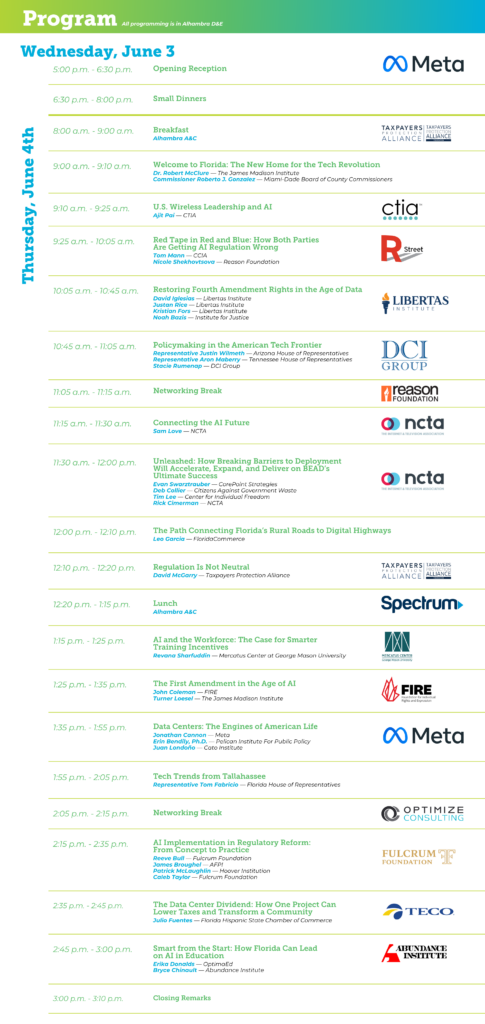
Join The James Madison Institute on June 3 & 4 for the 2026 Florida Tech and Innovation Summit brings together the thought leaders, policymakers, and industry pioneers who will chart this future.
June 3
5:00 – 6:30 p.m. Opening Reception
6:30 – 8:00 p.m. Small Dinners
June 4
8:00 a.m. – 3:40 p.m. – Tech Summit Panels and Discussions
Evening – Sponsor Thank You Event
Stay tuned for more information regarding tickets, speakers, and more.
Secure Your Seat Today!

Location:
Loews Coral Gables Hotel
2650 Coconut Grove Dr.
Coral Gables, FL 33134
Agenda
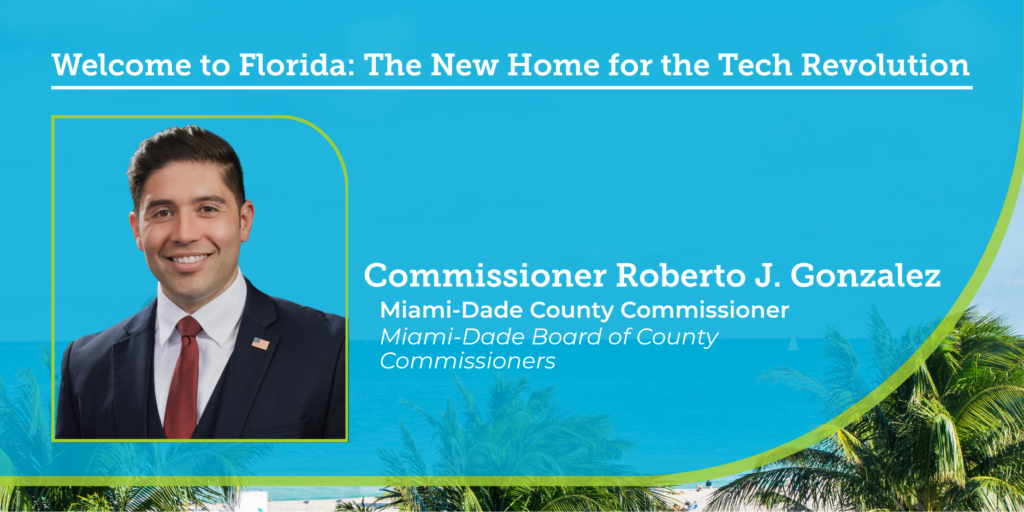
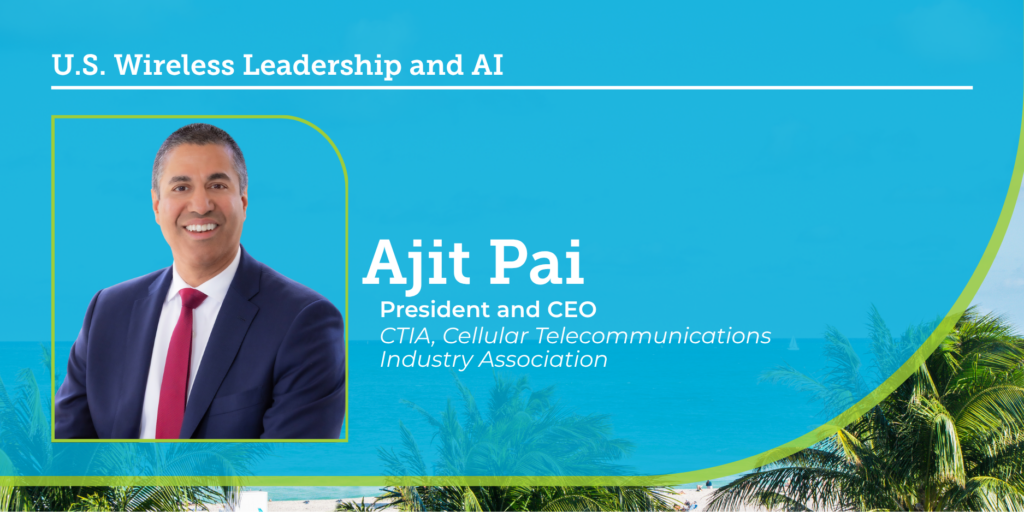
As artificial intelligence reshapes how Americans work, learn, and live, the decisions made today will shape the technological landscape of the next generation. Since robust broadband networks are essential to connect every community to the promise of AI, closing the connectivity gap is now inseparable from America’s continued leadership in the field. Join Ajit Pai, President and CEO of CTIA, for a discussion about the future of connectivity in the age of AI.

R Street Institute will lead an examination of how both political spectrums risk stifling AI innovation through heavy-handed regulations seen plaguing both blue and red states. Whether regulations are clouded in safety language or disguised as consumer-protecting, the effect is the same: burdensome bureaucratic interference in a rapidly changing market is not only hurting innovators but consumers alike. Resisting the urge to legislate first, this panel will highlight the need for flexible, industry-led standards prioritizing innovation, investment, and economic growth.

Americans are living in an era of unprecedented technological innovation—one increasingly driven by data. While state efforts to regulate how businesses collect and share information have proliferated, a more pressing threat to privacy lurks closer to home: state and local governments violating the Fourth Amendment rights of everyday Americans through warrantless searches of data and invasive surveillance technology.
Join the Libertas Institute for a conversation on Fourth Amendment-based policy solutions that empower policymakers and legislators to push back against a growing surveillance state and restore meaningful privacy protections for the public.
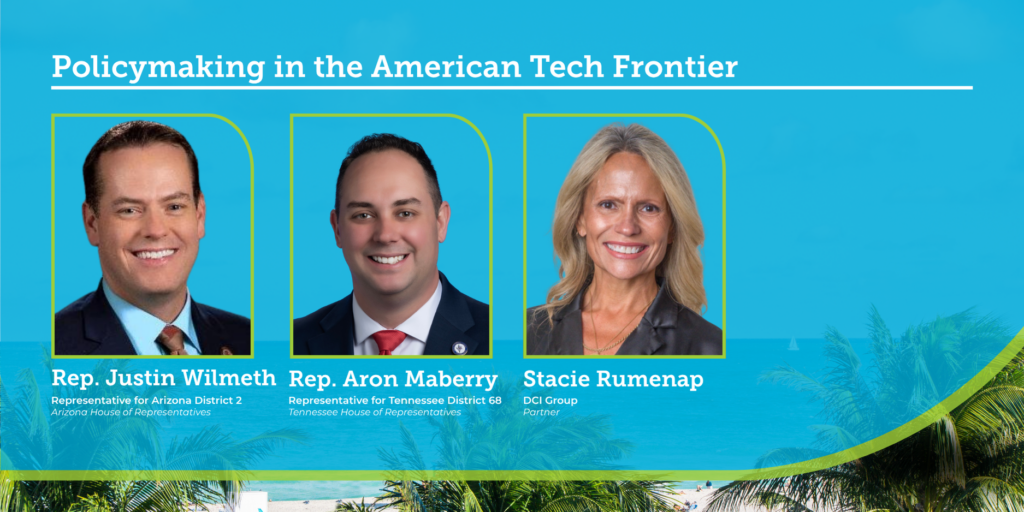
State legislatures are increasingly at the forefront of AI policymaking, moving faster than Washington to address the questions and concerns their residents face daily. Three legislators from around the nation join us in Coral Gables for a discussion on how they are navigating the opportunities and tradeoffs of AI adoption. The panel will explore critical issues, including how K-12 education can integrate AI tools, the emergence of AI-powered mental health chatbots, and the ways state governments can embrace AI across operations.
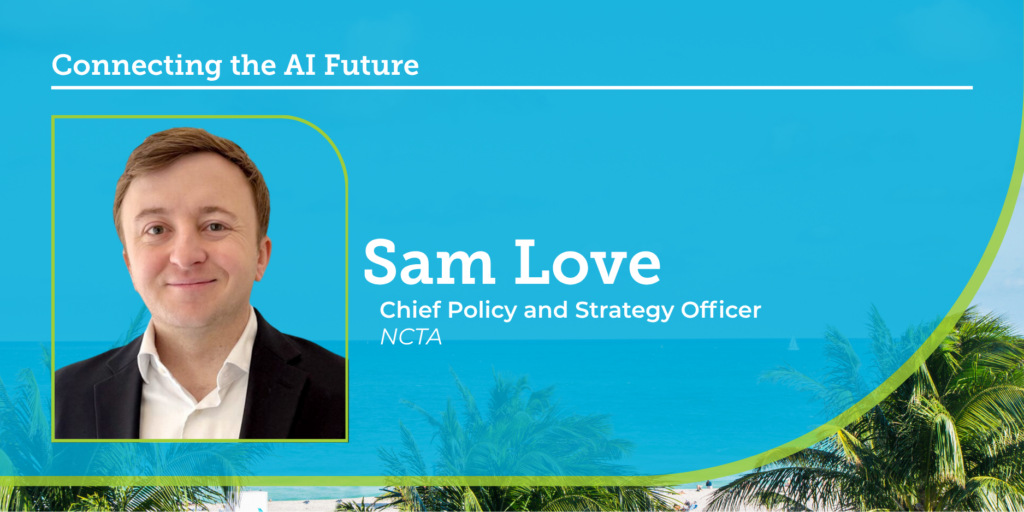
This conversation will explore how advanced broadband networks are enabling the next generation of AI-driven applications and experiences. From supporting growing consumer demand to integrating AI into network operations and infrastructure, the discussion will highlight how connectivity underpins the AI ecosystem. It will also examine how scalable, high-capacity networks are critical to U.S. competitiveness as AI drives innovation across homes, businesses, and data infrastructure.

Historic federal investment through BEAD created a once-in-a-generation opportunity to connect unserved communities, but timelines for success are increasingly being challenged by a number of barriers to deployment including permitting delays, duplicative requirements, inconsistent pole-attachment and right-of-way policies, and labor and supply constraints. This panel will examine the practical steps federal, state, and local policymakers can all take to accelerate broadband deployment and maximize the impact of BEAD funding by reducing regulatory friction, and aligning deployment policies with on-the-ground realities to secure connectivity to the communities still waiting to be served. The discussion will highlight best practices from states moving efficiently, lessons from early deployment challenges, and what must happen next to ensure BEAD delivers broadband at scale, on time, and cost-effectively.

Florida’s broadband buildout is one of the most complex infrastructure challenges in the country — spanning remote rural communities, a byzantine permitting landscape, and billions in federal BEAD dollars that need to be deployed effectively. Leo Garcia, who leads the Florida Broadband Office, joins us for a candid conversation on the state’s progress closing the digital divide, the on-the-ground realities of BEAD implementation, and the regulatory and permitting hurdles that can slow even the best-funded connectivity initiatives.

Social media and artificial intelligence have become the defining mediators of modern life, shaping how Americans access information, exchange ideas, and participate in public discourse. But as calls for regulation grow louder, so too does the risk of subjecting an ever-greater share of that discourse to state oversight and control. David McGarry makes the case that the choice between regulation and freedom is fundamentally zero-sum: power and influence flow either to private institutions or to the government, and policymakers should be clear-eyed about which direction their proposals push.

Revana Sharfuddin, Research Fellow at the Mercatus Center’s Labor Policy Project, will discuss her proposal to simplify and expand the tax code’s treatment of worker training expenses. Reforming how businesses expense workforce development would correct the tax code’s existing bias toward capital investment, bring human capital treatment into alignment with the changes to physical capital expensing enacted in the One Big Beautiful Bill, and ease compliance burdens on small businesses. Sharfuddin will situate these reforms within a broader argument for ensuring AI augments worker productivity rather than simply replacing it.

What constitutional limits should govern AI regulation? As lawmakers and courts confront questions surrounding AI-generated speech, deepfakes, disclosure mandates, identity verification, censorship, and misinformation, the First Amendment remains central to the future of free expression. This conversation will explore the constitutional and cultural stakes of AI’s growing role in the modern marketplace of ideas.

This panel explains the importance of data centers, reveals what is required to build the infrastructure supporting America’s AI future, and highlights why effective state-level policy is key to securing American leadership in AI and innovation.

The Florida 2026 Legislative Session saw technology policy rise to the top of the agenda in Tallahassee. Representative Tom Fabricio joins us to explore how the Florida Legislature is navigating the complexities of artificial intelligence, data center growth, the future of advanced air mobility, and fostering a pro-innovation environment.
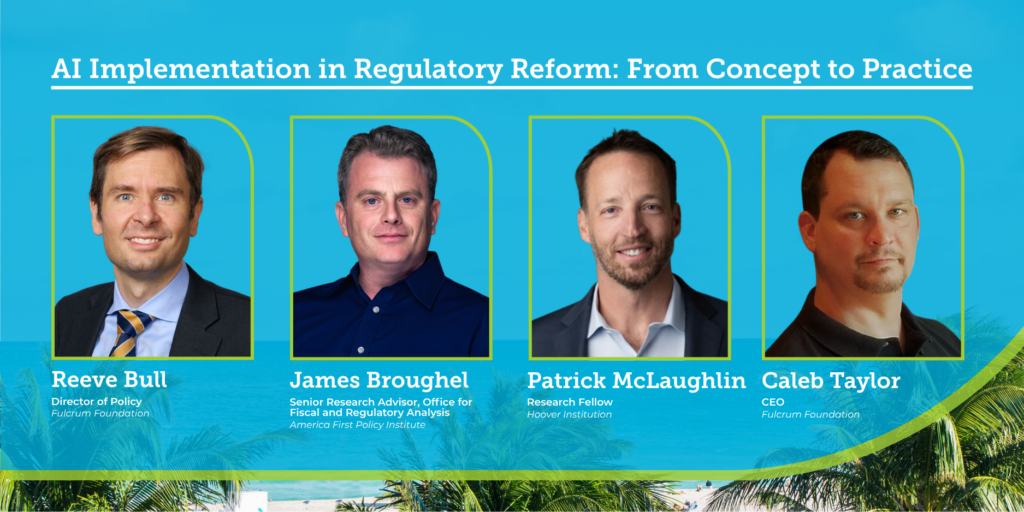
AI tools for regulatory analysis are no longer hypothetical. Systems now exist that can read entire regulatory codes, identify duplication and contradiction, benchmark requirements against peer jurisdictions, and translate dense legal text at scale. This panel brings together experts in computational regulatory infrastructure, regulatory economics, and operational reform inside government to focus on implementation: what successful deployment requires beyond the technology, where AI adds genuine value versus new friction, and what conditions separate jurisdictions that produce durable reform from those that produce reports. The harder questions are also on the table — where AI-assisted analysis ends and political judgment begins, and what a leaner, more legible regulatory state would mean for economic competitiveness and administrative legitimacy.
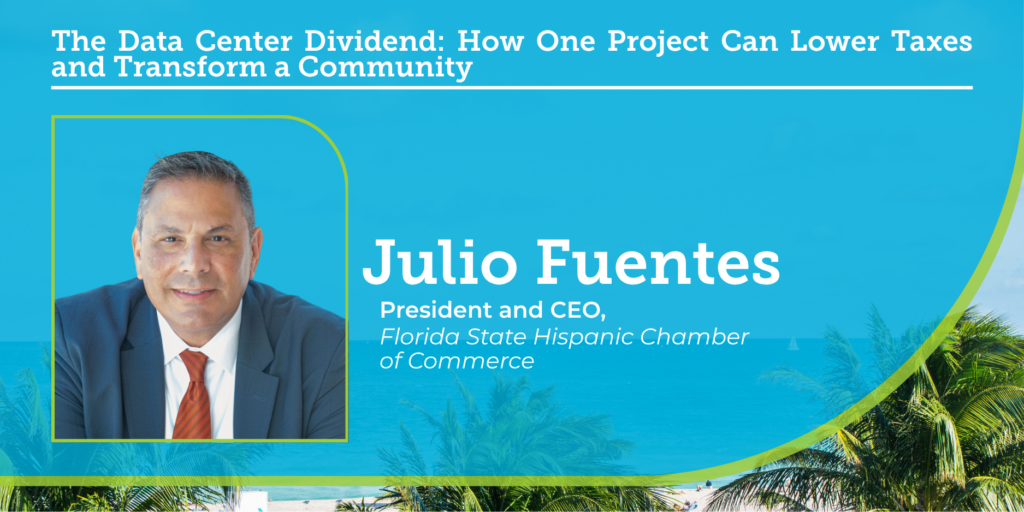
The introduction of hyper scale data centers have reshaped many American communities for the better. Labeled “budget goldmines” by a national real estate firm, they bring an influx of tax revenue to local communities, all without putting a heavy strain on services. Cities from Arizona to Georgia have leveraged the resources to build new hospitals, enhance existing schools and even cut taxes for local residents.

Few states are better positioned to get AI in education right than Florida — and few people have thought harder about it than Erika Donalds. In this fireside conversation, the education policy leader and school-choice advocate discusses how AI is already reshaping how students learn, what it means for parents and teachers, and how Florida can lead by empowering innovation rather than smothering it with premature regulation.

Would you like to become a sponsor of the 2026 Florida Tech & Innovation Summit?
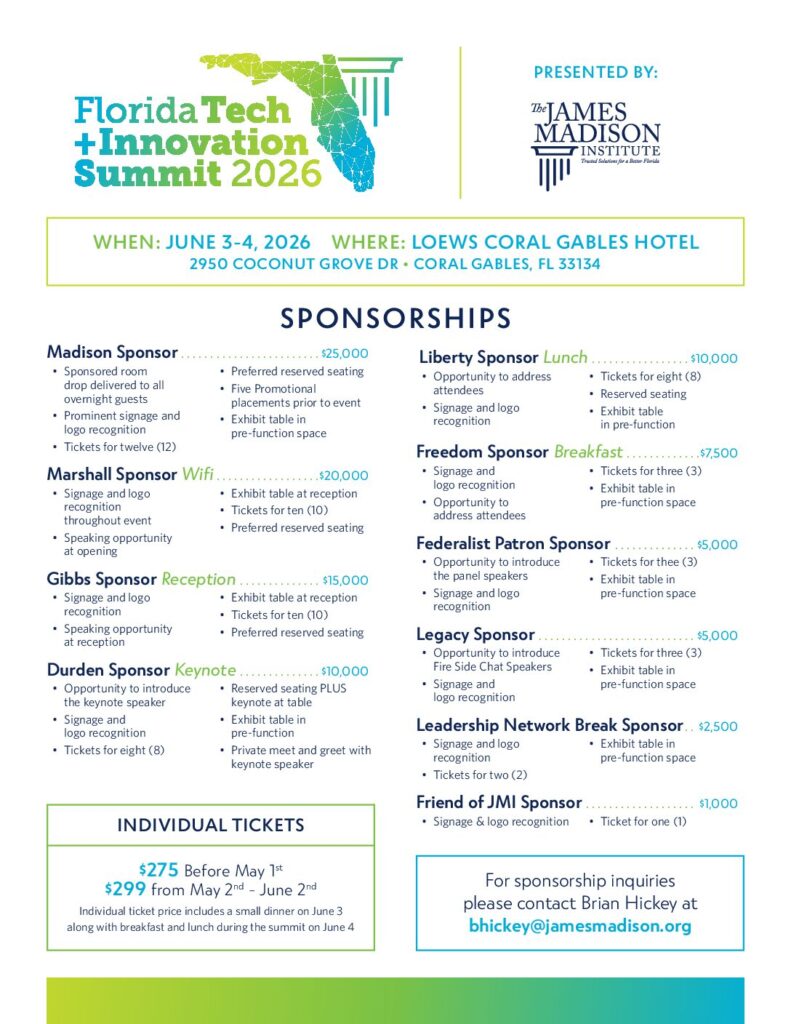
Join us in Coral Gables this summer as a sponsor of the 2026 Florida Tech & Innovation Summit. For more information or if you’re interested in sponsoring, contact Brian Hickey at bhickey@jamesmadison.org.